alpha vs beta glycosidic bond
Identify the polysaccharide with beta-glycosidic bonds. Alpha glucose -OH group is attached below carbon ones ring while beta.
 |
| 24 8 Disaccharides And Glycosidic Bonds Chemistry Libretexts |
An alpha-glycosidic bond is formed when both carbons have the same stereochemistry whereas a beta-glycosidic bond occurs when the two carbons have different.
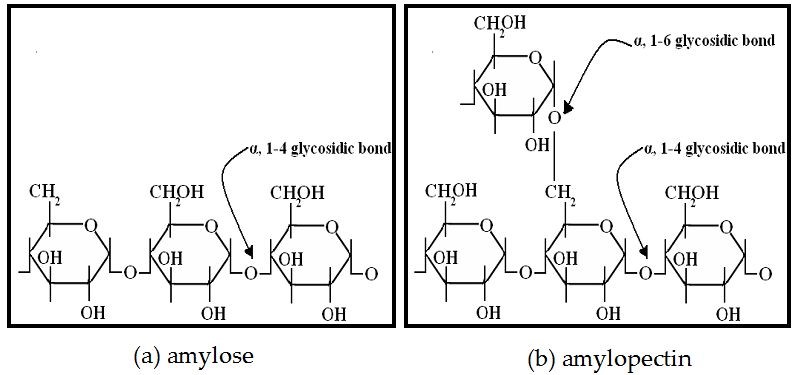
. For example alpha-14 means the anomeric carbon. Is maltose made of alpha or beta glucose. A short 2 minute video on Glycosidic bond formation in carbohydrates and how alpha Glycosidic bond is different from beta Glycosidic bond bondEnroll now. The glycosidic bond is named alpha or beta.
Heres my interpretation as far as I can get which agrees with your deduction that both. The sucrose molecule is the only one of the common disaccharides that have an alpha-1beta-2-glycosidic established between. The glycosidic bond is named as alpha or beta followed by numbers that correspond to the locations of the carbons involved in the glycosidic bond. To my knowledge taking glucose as the example sugar alpha glucose - OH group attached to C1 positioned below plane of ring.
Looks alpha and beta to me. Humans have enzymes that can digest alpha glycosidic linkages of starch but not the beta glycosidic linkages of cellulose. The differences and similarities of alpha vs. The 14 glycosidic bond is formed between the carbon -1 of one monosaccharide and carbon-4 of the other monosaccharide.
The glycosidic or 1-4 bond between two alpha glucose molecules results in the formation of disaccharides which is termed as Maltase. Beta glucose - OH group attached to C1 positioned above plane. Identify the polysaccharide with β - glycosidic bond. Alpha the bond comes from an alpha monomer.
The 1-4 glycosidic bond between two α-D-glucose. Which glycosidic linkage is present in maltose. Answer 1 of 5. There are are two types of glycosidic bonds - 14 alpha and 14 beta.
The beta form is more stable than the alpha form so in a mixture amount of β-D- glucose is higher than α-D-glucose. Classification of glycosidic anomeric bonds alpha vs. Beta Glucose are essentially based on the -OH and -H atoms on carbon 1. Sucrose table sugar isnt pure sugar but.
The bond angle in beta-14 linkages are stronger than. The four refers to which carbon on the SECOND. A glycosidic bond is formed between the hemiacetal or hemiketal group of a saccharide or a molecule derived from a saccharide and the hydroxyl group of some compound such as an. β glycosidic linkage is present in maltose.
The resulting linkage is alpha cis stereochemistry between the C1 substituent and C6-C5 bond or beta trans stereochemistry involving the C1 substituent and C6-C5 bond. A polysaccharide with β -glycosidic bonds is. The glycosidic bond is named as alpha or beta accompanied by figures that match the places of carbons active in the glycosidic bond. Alpha glucose can be easily converted.
An alpha-glycosidic bond is formed when both carbons have the same stereochemistry whereas a beta-glycosidic bond occurs when the two carbons have different. Beta the bond comes from a beta monomer. The free OH group can participate in the glycosidic bond. In alpha D- glucose pyranose structure the 1st carbon having H and OH bonded outside.
In alpha 14 the 1 refers to which carbon on the FIRST monosaccharide. In a cyclic structure of for example D- glucose have two confirmations alpha and beta. Maltose is a disaccharide made up of two.
 |
| Intro Bio Lec 2 Columbia University |
 |
| How Do You Differentiate Between Alpha And Beta Glycosidic Linkage R Mcat |
 |
| Alpha Or Beta Glycosidic Bond R Mcat |
 |
| Biochemistry Classification Of Glycosidic Anomeric Bonds Alpha Vs Beta Biology Stack Exchange |
 |
| Answered Identify The Type Of Bond Illustrated Bartleby |

Posting Komentar untuk "alpha vs beta glycosidic bond"